What Is Congregational Care? 25 Ministry Ideas and How to Start
Congregational care explained: how it differs from pastoral care, 25 church care ministry ideas, six steps to organize volunteers, and how to measure it.
By Thomas Griffin, Owner and CEO
Published
Congregational care is the care a whole church gives its own people. Trained volunteers visit the sick and homebound, call people in hard seasons, send cards, bring meals, give rides, and stay with the grieving. A staff or lay leader organizes the work, so each need has one owner and nobody is missed.
If you are the pastor who hears about every surgery and remembers every anniversary, this guide is for you. It explains how congregational care differs from pastoral care, then gives you 25 ideas, six steps to start, and a way to tell if it is working.
What Is Congregational Care?
In many churches, care depends on the pastor. The pastor hears about the surgery, makes the visit, sends the card, and remembers the anniversary. That works until the church grows past what one person can hold. It shows up in small ways first. A member mentions on Sunday that her husband was in the hospital last week, and it is the first you have heard of it. You are not failing when that happens. You are one person, and the list has outgrown you.
Congregational care is the answer the early church found. In Acts 2, the believers shared meals, shared what they had, and met each other's needs. Jodi Cataldo of United Methodist Discipleship Ministries says it plainly in the article Wrapping one another in Jesus' love: congregational care "is not the 'pastor's job.'" The pastor equips. The people care.
A congregational care ministry has four parts:
- A leader who sees the whole care list.
- Trained volunteers who make most of the contacts.
- Clear guidelines on privacy, boundaries, and when to call the pastor.
- One shared record so the second volunteer knows what the first one did.
Congregational Care vs Pastoral Care
The terms overlap. Some churches use them as if they mean the same thing. Most churches that use both make a distinction like this:
| Pastoral care | Congregational care | |
|---|---|---|
| Who gives it | Pastors, priests, ordained leaders | Trained volunteers, deacons, elders, care teams, led by staff |
| Typical needs | Deaths, crises, sacraments, counseling, serious illness | Visits, calls, cards, meals, rides, grief follow-up, homebound care |
| Scope | Deep care for fewer people at a time | Steady contact with many people over time |
| Relationship | The pastor is the main point of contact | Each member has a care team member who knows them |
The two depend on each other. The care team notices a need first and tells the pastor. The pastor handles the crisis and then hands ongoing contact back to the team. For a full definition of the older term, read what pastoral care is.
What Does a Congregational Care Pastor Do?
Larger churches often hire a congregational care pastor, or give the work to an associate pastor. In a small church, a lay care coordinator can fill the same role for a few hours a week.
The job usually includes:
- Sorting needs. Every new need comes to this person first. They decide who goes and how soon.
- Crisis and hospital care. They make the visits that need a pastor and cover for the senior pastor.
- Funerals and grief care. They plan with the family and start the grief follow-up for the year after.
- Volunteer care. They recruit, train, schedule, and thank the care team. They also notice when a volunteer is worn out.
- Records and privacy. They keep the care record current and decide which notes are restricted.
- Reporting. They give the senior pastor or board a short monthly report. See how to report pastoral care to your board.
A care pastor who makes every visit alone runs out of hours long before the list runs out of names. A care pastor who trains ten volunteers has ten more people who notice when someone is hurting.
25 Congregational Care Ministry Ideas
You do not need all 25. Pick three that meet the biggest needs in your church and do them well for one year. Then add more.
Visits
- A visit within 48 hours of a hospital stay. A pastor or trained visitor. Our guide on how to start a hospital visitation ministry shows how.
- Home visits after surgery. The second week at home is often lonelier than the hospital.
- A visit team with a schedule. Pair a new visitor with an experienced one. See how to schedule a volunteer visitation team.
Cards and Notes
- A card team that meets once a month. Three or four people write cards for illness, grief, birthdays, and anniversaries.
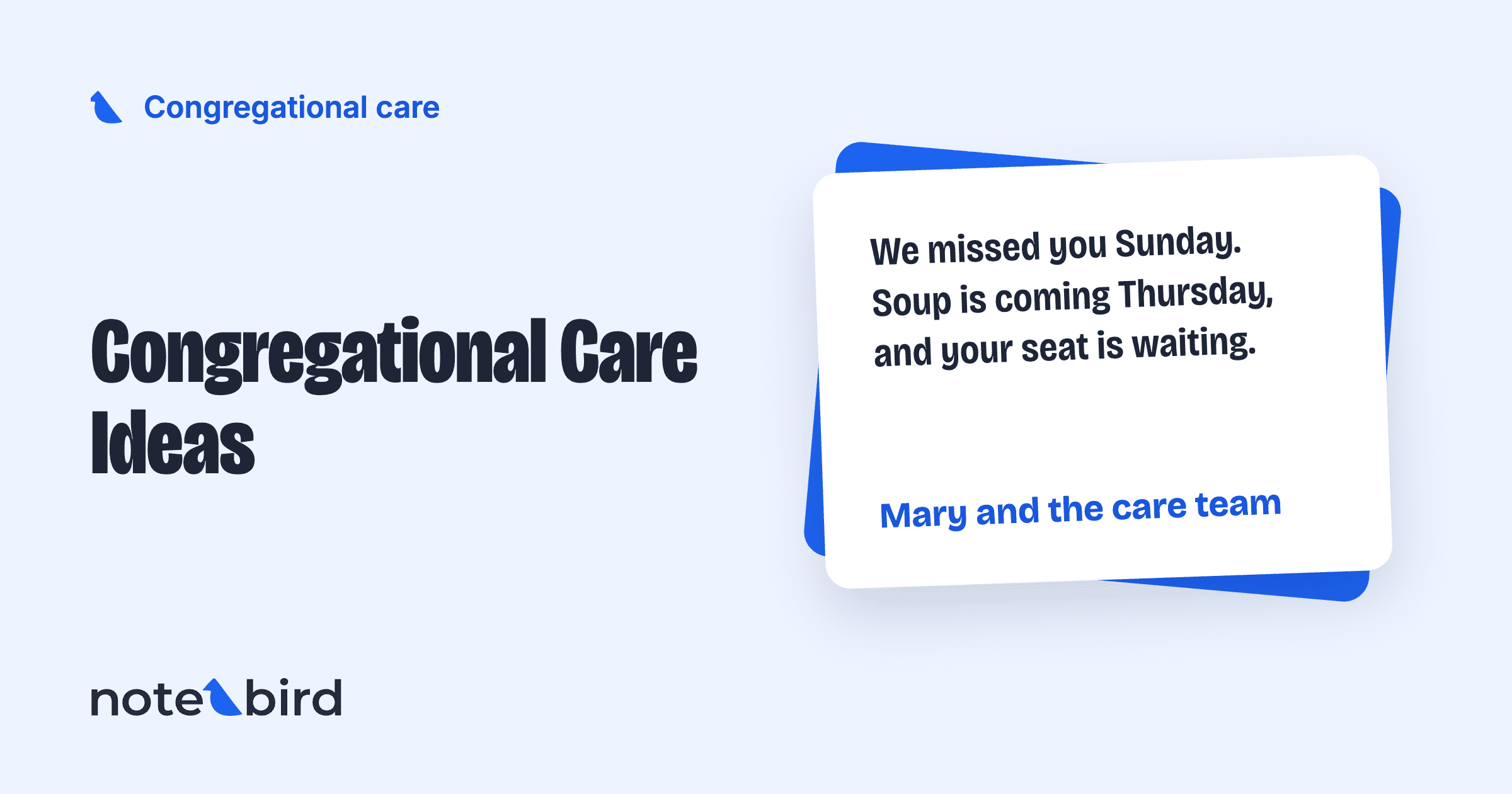
- "We missed you" cards for people who have been absent for three or four Sundays.
- Cards signed by a whole class or small group. Many names on one card mean a lot.
- Thank-you notes to caregivers. The spouse who drives to every treatment rarely gets mail.
Phone Calls
- A calling team. People who cannot drive can still call. Give each caller five to ten names for the month.
- A short call on the day of a scan, surgery, or court date. "I am praying for you at 10."
- A "reach out" list each week. The leader picks three to five people nobody has contacted in a month and gives each name to a caller.
Meals
- Meals after a birth, a surgery, or a death. Plan for one or two weeks, not one night.
- Freezer meals stored at church for a family in a sudden crisis.
- A meal and a visit. The person who drops off dinner sits for ten minutes, if the family wants company.
Rides and Errands
- A ride team for medical appointments, worship, and the grocery store.
- Errand help during treatment: prescriptions, groceries, and the post office.
- A yard and home team for a widow, a homebound member, or a family after a death.
Grief Care
- Grief contacts through the first year. A card or call at 1 week, 1 month, 3 months, 6 months, and the first anniversary. Use our 12-month grief care calendar.
- A holiday card for each family in their first holiday season after a loss. See the first Christmas after a loss.
- A grief group that meets for a set number of weeks, two or three times a year.
New Members and Newcomers
- A welcome visit or coffee within two weeks of joining.
- A care partner for the first year. One person checks in each month and introduces the new member to others.
Homebound and Care Facilities
- A monthly call and visit to every homebound member. Bring communion if your tradition allows. Read our homebound ministry guide.
- Worship at home. A recorded service, a printed bulletin, or a short service at the care facility.
Milestones and Life Events
- Cards on birthdays, anniversaries, and the anniversary of a death. The date of a death is the one most churches forget.
- A gift and a visit for new parents, then a check-in at six weeks. See how to care for new parents.
A few more ideas: a prayer chain with a clear privacy rule, a pet care team for members in the hospital, a care closet with walkers and shower chairs, and a "first week back" call after someone returns to church after a long absence.
How to Start a Congregational Care Ministry in 6 Steps
1. Get the Pastor's Blessing and Name One Leader
The ministry needs a leader who has time and the trust of the pastor. That can be a staff member or a volunteer. Agree on what the leader decides alone and what goes to the pastor.
2. Find Out Who Needs Care Now
Before you recruit, make the list. Include the homebound, members in care facilities, families who lost someone in the last 12 months, people with a serious illness, new parents, new members, and people who have not attended in two months. This list shows you which ministries to start first.
3. Recruit Six to Ten Volunteers and Give Each One a Role
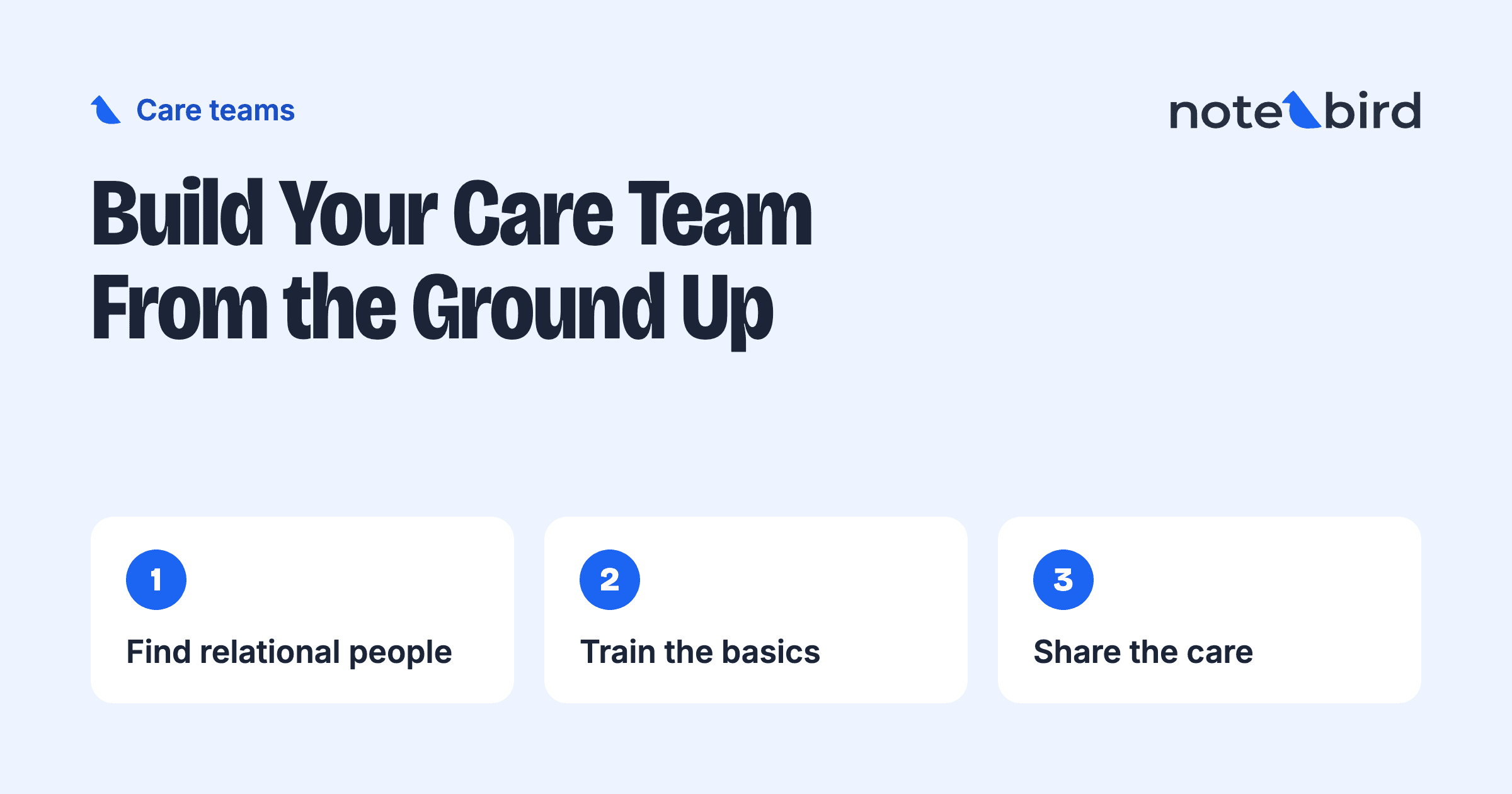
Ask people in person. Look for the people who already care for others without a title. Give each person one role: visitor, caller, card writer, meal coordinator, or driver. Our guide on how to build a pastoral care team covers roles, training sessions, and who to invite.
4. Write Short Guidelines
Agree on privacy, boundaries, response times, and when to call the pastor. Two or three pages is enough. Use our pastoral care policy template as a starting point.
5. Give Each Volunteer a Small Group of People
This step is easy to skip, and it matters most. A volunteer with "the whole church" cares for nobody in particular. A volunteer with eight names knows those eight people. Divide by area of town, by age, by small group, or by need. Many churches assign households to deacons. See our deacon care ministry guide.
6. Keep One Record and Meet Once a Month
Every contact gets a short note. Every follow-up gets one owner and a due date. Once a month, the team meets to pray, review open needs, and find people nobody has contacted.
How to Organize a Volunteer Care Ministry
This is the part that makes a care ministry last. Volunteers stay when they know what to do, when to do it, and when to hand it off. Use a simple response table so nobody has to guess:
| Need | First response | Who | Then |
|---|---|---|---|
| Death in the family | Visit or call the same day | Pastor | Care team starts grief contacts for the year |
| Hospital stay | Visit or call within 48 hours | Pastor or visitor | Call again after discharge |
| Surgery at home | Call within 3 days, offer meals | Care team member | Call each week until recovered |
| New baby | Card and meal offer within a week | Card team, meal coordinator | Visit at 6 weeks |
| Homebound member | Call each month, visit each quarter | Assigned caller and visitor | Communion as your tradition allows |
| No attendance for a month | Friendly call | Assigned care team member | Tell the pastor if there is a hurt or a crisis |
| Crisis or safety concern | Tell the pastor the same day | Anyone who hears it | Pastor decides on referral or report |
Three rules keep this table working:
- One owner per need. "Someone will call" means nobody calls.
- A due date on every follow-up. A promise without a date is easy to forget.
- The leader checks the open list each week. Not to blame anyone, but to move stuck needs to someone else.
How to Measure Congregational Care
Pick four or five measures that show whether people get missed and review them each quarter.
| Measure | How to count it | A good place to start |
|---|---|---|
| Time to first contact | Days from a request or a hospital admission to the first visit or call | 2 days or less for urgent needs |
| Reach | Members with at least one contact in the last 90 days | Raise it each quarter |
| Hospital care | Hospital stays that got a visit or call | All of them |
| Grief follow-through | Grieving families contacted at 1, 3, 6, and 12 months | All of them |
| Overdue follow-ups | Open tasks past their due date | Fewer each month |
| Team load | Contacts made by volunteers, not only staff | A growing share |
Watch the last measure closely. If the pastor still makes most of the contacts, the care is not shared yet, and the pastor is still carrying the list alone.
Also ask people. Once a year, ask a few members who went through a hard season: "Did you feel cared for? What helped? What did we miss?" Their answers will teach you more than any number.
Keep Your Volunteers Going
Care volunteers rarely quit because the work is hard. They quit because they feel alone, untrained, or unthanked. Give each volunteer a small, clear role. Train them a little at every monthly meeting. Let them rest for a season without guilt. Thank them in person. Our guide to volunteer retention for care teams has more.
Other churches have done this well for decades. Stephen Ministries, for example, trains lay caregivers who each meet one care receiver once a week. Its page What Is Stephen Ministry? explains the model. The Unitarian Universalist Association's guide to lay pastoral care teams gives similar advice from a different tradition: give the team a clear charge, meet at least monthly, and protect people's privacy.
Care That Does Not Depend on One Person
The goal is not a bigger program. The goal is a church where each person has someone who notices them, and where the pastor is no longer the only one who knows who is hurting. Start with one leader, a short list, and three ideas you will do well.
Notebird helps care teams keep one shared record, give every need an owner, and protect private notes, so the care list lives in one place and not in one tired person's head. See how it works for church follow-up, or read about church visitation software.