Homebound Ministry: How to Care for Shut-In Church Members
Start a homebound ministry: find every shut-in member, set a rhythm of visits, calls, cards, and communion, and track who is due next. Free printable schedule.
By Thomas Griffin, Owner and CEO
Published · Updated
A homebound ministry is how a church stays close to members who can no longer come to worship because of age, illness, or disability. It works when you keep a list of every homebound member, set a contact rhythm for each person, share the visits, calls, cards, and communion across a team, and track who is due next.
Homebound members are often the people who gave the most to your church. They taught Sunday school, sang in the choir, and cooked for every funeral. Now they cannot come to worship, and it is easy for a busy church to forget them. This guide shows how to make sure that does not happen.
What Is a Homebound Ministry?
A homebound ministry, also called a shut-in ministry or a limited access ministry, is the part of pastoral care that goes to people who cannot come to you. It includes members who live at home and rarely leave it, members in assisted living or nursing homes, and people who are homebound for a season after surgery or a long illness.
The need is large. A study in JAMA Internal Medicine estimated that close to 2 million Americans aged 65 and older were completely or mostly homebound in 2011. Almost every congregation has some of them.
Many churches use "shut-in" and "homebound" for the same people. Some people do not like the word shut-in. When you are not sure, use homebound, or use the word the person uses about themselves.
The same work happens in synagogues, where a caring committee often visits members who cannot attend services. See our synagogue caring committee guide for that setting.
Why Homebound Members Need More Than an Occasional Visit
A visit at Christmas and a card at Easter are kind. But for someone who rarely leaves the house, months of quiet in between are hard.
The CDC says that social isolation and loneliness raise the risk of heart disease, stroke, depression, dementia, and dying earlier. For many homebound members, the church is one of the last communities they still belong to. A regular call or visit is not a small thing. It may be the main conversation of their week.
Homebound members also have gifts to give. Many pray faithfully. Some can write cards, make calls, or share stories of the church's history. A good homebound ministry does not only care for these members. It keeps them part of the church's work.
How to Start a Homebound Ministry at Your Church
1. Find Every Homebound Member
Most churches know some of their homebound members and miss others. Build a full list:
- Ask your pastor, deacons, and care team who they visit now.
- Look for long-time members who stopped coming to worship in the last two years.
- Ask families during prayer requests: "Is anyone in your family not able to get to church?"
- Include members in assisted living, nursing homes, and memory care.
- Add people who will be homebound for a season after a surgery or a hospital stay.
2. Ask Each Person What They Want
Do not guess. Call or visit each person and ask a few simple questions. Would you like visits? What time of day is best? Would you like to receive communion at home? Would you like a printed bulletin or a recording of the sermon? Who should we call if we cannot reach you? Write down the answers.
Some people want a weekly visit. Others want a phone call and nothing more. Respect what they say.
3. Set a Contact Rhythm for Each Person
A rhythm turns good intentions into care that happens. Give each person a plan: for example, a call every two weeks, a visit each month, and a card each month. The table below is a good place to start.
| Contact | How often | Who usually does it |
|---|---|---|
| Phone call | Every 1 to 2 weeks | Assigned volunteer |
| Home visit | Monthly | Volunteer pair or deacon |
| Communion | Monthly, or as your tradition practices | Pastor, elders, or trained lay ministers |
| Card or letter | Monthly | Card team, a Sunday school class, children |
| Pastor visit | Every 3 months, and after any hospital stay | Pastor |
| Birthday and anniversary | On the date | Assigned volunteer |
| Holidays | Christmas and Easter | Youth group, small groups, families |
| After a hospital stay or a fall | Within a week of returning home | Pastor or care team lead |
Add more contact for people who live alone, who just lost a spouse, or whose health is changing fast.
4. Build a Small Team
One pastor cannot keep up with 20 homebound members alone. Recruit a small team: deacons, retired members, and people with the gift of mercy. Give each volunteer three to five homebound members to call and visit. The same faces each month build trust.
Screen visitors the same way you screen children's ministry volunteers. You are sending them into the homes of vulnerable people in the church's name. For recruiting and training, see how to build a pastoral care team.
5. Keep One Shared Schedule
This is where most homebound ministries break down. The plan lives in the pastor's head, on a few sticky notes, or in one volunteer's notebook. Then the volunteer moves, and three people go months without a call.
Churches often ask us how to remember when a shut-in member is due a card or a call. That question is the heart of a homebound ministry. Keep one schedule that the whole team can see. For each person, track the contact rhythm, the last contact, the next date due, and who is responsible.
6. Review the List Every Month
Once a month, the team lead looks at the schedule and asks three questions. Who is overdue? Whose health or living situation changed? Who should be added or taken off the list? It takes 15 minutes, and it is the step that keeps the ministry from slowly fading.
How to Make a Good Homebound Visit
A visit to a homebound member is a lot like a hospital visit, but slower and less rushed. These steps work for most visits.
- Call ahead. Confirm the time. Many homebound people have home health aides, doctor visits, and good and bad days.
- Bring the church with you. Bring the bulletin, news about people they know, a recording of last Sunday's sermon, or a card signed by a class.
- Stay 20 to 30 minutes. Long enough to talk, short enough not to tire them. Watch for signs they are getting tired.
- Listen more than you talk. Ask about their week, their family, and their memories of the church. Many homebound members have stories no one has asked about in years.
- Read Scripture and pray. A short psalm and a simple prayer are enough. Ask what they would like you to pray for.
- Ask about needs. Do they need a ride to the doctor, a meal, or help with a small repair? Pass practical needs to the right person.
- Notice changes. Is the person more confused, thinner, or less steady than last month? Is there food in the house? Share real concerns with the pastor, who can talk with the family.
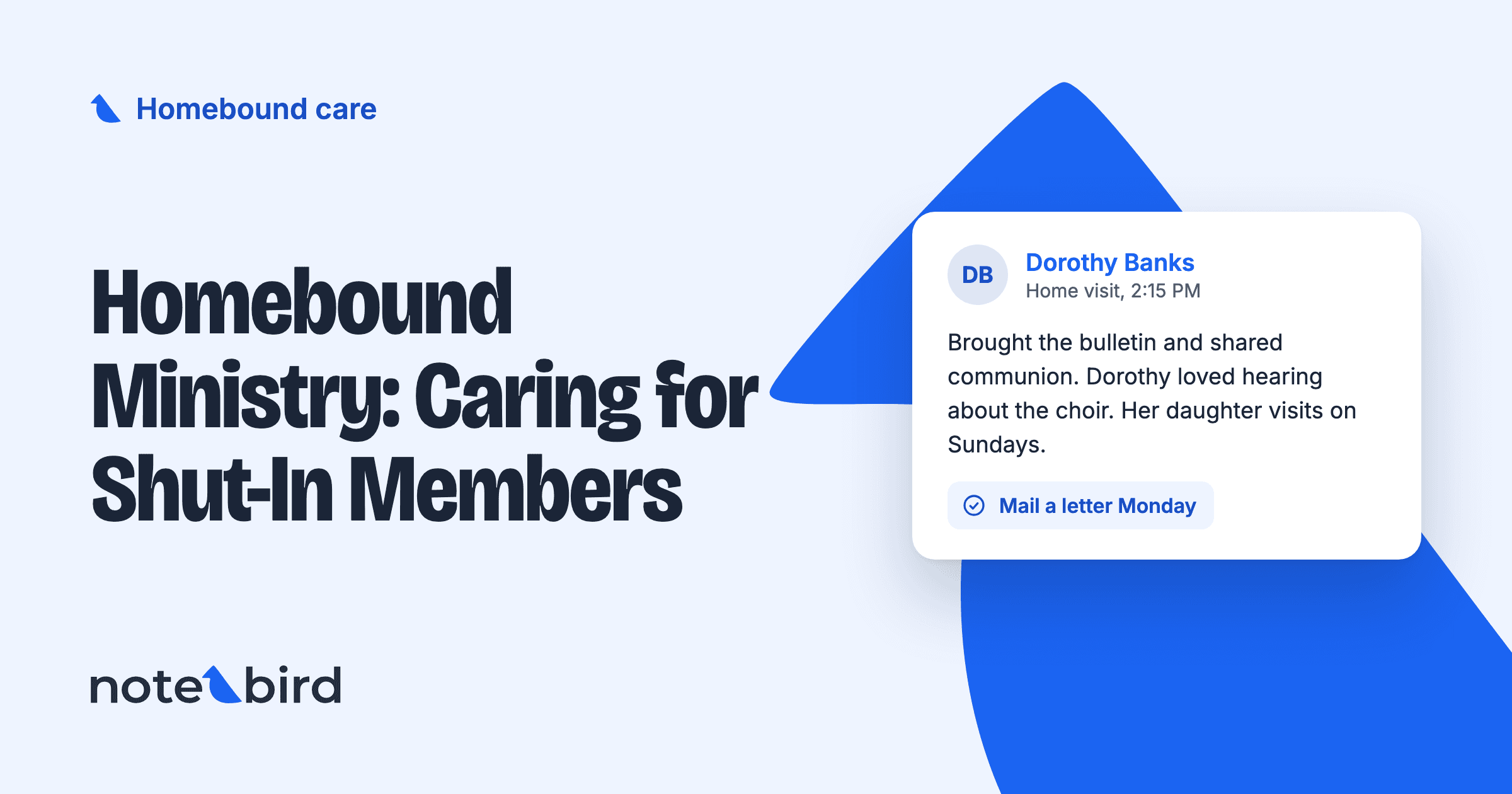
- Write a short note. Within a day, record the visit and anything the next visitor should know.
Bringing Communion to Homebound Members
For many homebound members, communion is the thing they miss most. Most traditions have a way to bring it to them. In the Presbyterian Church (U.S.A.), for example, the Extended Serving of Communion lets two or more ordained officers take the elements to members after worship on the same day, as an extension of the congregation's own table. Its stated goal is to make it easier for elderly, disabled, and homebound members to take part regularly. Other traditions send the pastor, a deacon, or a trained lay minister. Ask your pastor how your church does it, and put communion on each person's schedule if they want it.
Ways to Stay Close Between Visits
Calls and visits come first. But other touch points remind homebound members that they still belong.
Send personalized letters. A handwritten letter carries a warmth that an email cannot. Ask a team of volunteers to write each month. Share church news, a word of encouragement, and a verse. Ask if they have prayer requests. Children's classes can make cards, too.
Send the newsletter in a format they can use. Print the bulletin and newsletter in large type. Offer audio recordings for people with poor eyesight. Include stories and photos of people they know.
Make worship available at home. Livestream or record your services, and help each person set it up. A volunteer can install the app on a tablet or show a family member how to start the stream. For members without internet, mail a recording or offer a phone line they can call to listen.
Give them a ministry. Invite homebound members to join the prayer team. Send them the prayer list each week. Ask them to write cards to visitors or to students away at college. Let them share their story in the newsletter. People want to give, not only receive.
Remember the dates. Birthdays, wedding anniversaries, and the anniversary of a spouse's death matter even more to someone who spends most days alone. Track these milestones so your team calls on the right day.
Care for the caregivers. Many homebound members are cared for by a spouse or an adult child. Caregivers are often tired and cut off from church, too. Ask them how they are doing, and offer a visit or a meal for them.
How to Remember Who Is Due a Call or a Card
A homebound ministry with three members can run on memory. A ministry with 15 members and six volunteers cannot. Here is a simple weekly routine:
- Monday: Each volunteer looks at their list and sees who is due a call, a visit, or a card this week.
- During the week: Volunteers make the contact and write a short note about how it went.
- Friday: The team lead checks for anyone overdue and follows up.
A printed schedule works for a small list. When several people share the work, a shared tool with reminders keeps the schedule from slipping.
New Notebird church accounts start with a Homebound group and with Home Visit and Communion Visit update types, so the whole team can see each visit. See how teams use it for church visitation.
Keep Them in the Family
Homebound members did not leave the church. The church just has to go to them now. Start this week with one list and one phone call.