How to Care for New Parents: A Church Ministry Guide
Meals, visits, texts, postpartum depression signs, NICU and adoption care, and a timeline from birth to the first birthday. For pastors and care teams.
By Thomas Griffin, Owner and CEO
Published
To care for new parents, bring meals for the first two to three weeks and keep visits short. Text often, and say "no need to reply." Watch both parents for signs of postpartum depression. Care for older siblings too. Then stay in touch through the baptism or dedication and up to the first birthday, after the meals stop.
Why New Parents Need the Church
A new baby is a joy. It is also a shock. Parents lose sleep, routines, and time with friends. Many have no family nearby. In the middle of the night, with a crying baby and a cold cup of tea, a parent can feel like the only person awake in the world. A mother is healing from birth while she learns to feed a newborn. A father or partner may go back to work after a few days and feel torn between home and job.
The church can be the extended family that many young parents do not have. Meals, short visits, and a steady voice on the phone tell them, "You are not alone in this."
Most churches do the first week well. The cards and casseroles come fast, and then they stop. Weeks 3 to 12 can be the hardest, and the first year has its own lonely stretches. This guide gives you a plan for the whole first year.
How to Set Up Meals for a New Baby
Meals may be the most loved help a church gives. They feed the family, and they say, "We thought of you today."
Notebird does not run meal sign-ups. Use a free online meal sign-up tool, so volunteers can choose dates, see what others are bringing, and get the address and drop-off notes in one place.
Steps for a good meal plan:
- Ask the parents first. "Can we set up meals for you? Would two or three weeks help?"
- Ask the details. Allergies, foods they do not like, how many people eat, and the best time to drop off.
- Name one coordinator. That person answers volunteers' questions, so the parents do not have to.
- Start a few days after they come home. Family may help the first days. Meals help more when that help leaves.
- Plan every other day for two to three weeks. Leftovers cover the day between.
- Use containers that do not come back. Returning dishes is one more task for a tired parent.
- Add the extras. Paper plates, breakfast food, fruit, snacks a parent can eat with one hand while they feed the baby.
- Leave it at the door if they ask. A cooler on the porch lets parents get the food without a visit.
Not every family wants meals. Other gifts help as much: a gift card for take-out, a grocery delivery, or a freezer meal they can use in week five, when nobody else is bringing food.
How to Visit New Parents
A visit can bless a family or wear them out. The difference is in a few small habits.
- Text first. "We would love to drop off dinner and meet the baby. Would Thursday at 5 work, for 15 minutes?"
- Keep it short. Fifteen to twenty minutes is enough. Leave before they get tired.
- Bring food. Even a bag of muffins says you came to give, not to be hosted.
- Wash your hands when you arrive. Do not visit if you have a cold, a cough, or a fever.
- Do not ask to hold the baby. If the parents offer, you can say yes. Many parents want time with their baby and do not want to pass the baby around.
- Do a chore. "Can I fold that laundry while we talk?" or "I'll take the trash out on my way."
- Talk to the parents, not only about the baby. Ask, "How are you doing?"
- Pray briefly, if they welcome it. Ask first.
A pastor's visit to the hospital or home in the first days often means a great deal. If the parents want a blessing for the baby, keep it short and joyful.
What to Say to New Parents
Words that help:
- "Congratulations. She is beautiful. How are you both doing?"
- "What has been the hardest part so far?"
- "What would help most this week?"
- "I am going to the store tomorrow. Can I pick up anything?"
- "There is no right way to feel right now. You are doing a good job."
What not to say:
- "Is she sleeping through the night?" Most newborns do not. The question can feel like a test the parents are failing.
- "Are you breastfeeding?" Feeding is a private choice, and it can be a sore subject.
- "Enjoy every minute. It goes so fast." Some minutes are hard. This can make a tired parent feel guilty.
- "You look tired." or "You look great." Comments on a new mother's body or face are seldom welcome.
- "When is the next one coming?" Do not ask about future children.
- Advice they did not ask for. Share your experience only if they ask.
What to Text New Parents
Texts are kind because a parent can read them at 3 AM with one hand.
- "Thinking of your family today. No need to reply."
- "Heading out for groceries later. Need diapers, wipes, or milk? One word is plenty."
- "Praying for good sleep for all of you tonight."
- "Dinner is in the cooler on your porch. Enjoy, and don't text back."
- "We missed you on Sunday. Take your time. Your seats will be here when you are ready."
What to Write in a Card for New Parents
Two or three sentences are enough:
- "Welcome to the world, Ava. Your church family is so glad you are here. We are praying for you and your whole family."
- "Congratulations on your new son. We thank God for him, and we are here for you."
- For an adoption or foster placement: "We are so glad Marcus is part of your family. We are praying for all of you as you settle in together."
A card signed by a Sunday school class or small group means even more.
Postpartum Depression: Signs and When to Refer
Postpartum depression and anxiety are common, and they can affect any parent. Postpartum Support International says that "1 in 5 moms and dads report experiencing depressive and/or anxiety symptoms in the first year postpartum." See its page on perinatal mental health.
Signs Postpartum Support International lists include:
- Crying and sadness
- Lack of interest in the baby
- Anger
- Changes in sleep and appetite
- Feelings of guilt or hopelessness
- Constant worry or racing thoughts
- Possible thoughts of harming the baby or yourself
The church cannot diagnose. But a care team member may be the first person to notice. If you see these signs, say what you see with care: "You seem really worn down. A lot of parents feel this way, and it can get better with help. Have you talked with your doctor?"
Give them these numbers:
- National Maternal Mental Health Hotline: call or text 833-852-6262. Postpartum Support International notes that counselors are available 24/7 in the United States.
- Postpartum Support International HelpLine: 1-800-944-4773, in English and Spanish.
If a parent talks about harming themselves or the baby, do not wait. Stay with them and get help that day. In the United States, call or text 988, the Suicide and Crisis Lifeline, or call 911 in an emergency.
Ask fathers and partners how they are doing too. They can struggle, and fewer people ask them.
Care for NICU Families
When a baby is born early or sick, the family's first weeks happen in the neonatal intensive care unit (NICU). The joy is mixed with fear. Parents may drive back and forth to the hospital each day for weeks, then sit for hours beside an incubator while the monitors beep.
How to help:
- Ask before you visit. Most NICUs limit visitors. Visit the parents in the waiting area or the cafeteria, not the baby's room.
- Help with the drive. Gas cards, parking money, or rides help a lot.
- Feed them at the hospital. Bring food they can eat in the family lounge.
- Care for the home front. Older children, pets, mail, and the lawn still need care.
- Do not ask for medical updates. Let the parents share what they want.
- Start meals when the baby comes home, not only when the baby is born.
If a baby dies, the care changes to grief care. Our guide on how to care for someone after a miscarriage covers much of what parents need after the loss of a baby.
Adoption and Foster Placement
A child who arrives by adoption or foster placement is a new baby to the family, whatever the child's age. The family needs the same meals, visits, and cards.
A few things are different:
- Ask how much to share. Some details of the child's story are private. Some foster families cannot post photos or share names.
- Avoid comments on the child's past. Do not ask "Where are his real parents?" Say "birth parents" if the family uses that term.
- Expect a time of adjustment. Older children may need quiet weeks at home, not a crowd at church.
- Plan for change. A foster placement may end. If a child leaves, the family grieves, and the church should notice.
- Mark the day. Many adoptive families celebrate the day the child joined them. Ask if they want the church to remember it.
Care for Older Siblings
Big brothers and sisters can feel left out when every visitor asks to see the baby. A little attention helps them feel seen:
- Bring a small gift for each older child when you bring the baby gift.
- Offer an afternoon at the park, or a ride to practice.
- Ask the children's ministry leader to say, "I heard you are a big sister now."
Care for Single Parents
A single parent has no one to trade night feedings with. They may have less money and fewer hands. Offer more of everything: longer meal plans, a standing ride, a night when a trusted volunteer helps with the older children. Do not ask about the other parent. Welcome them and the baby without any comment on their story.
A New Parent Care Timeline to the First Birthday
| When | What to do | Who |
|---|---|---|
| Birth or arrival | Text congratulations. Ask if they want a hospital or home visit, and if they want the news shared. | Pastor |
| First week home | Send a church card. Start the meal plan. Short visit if welcome. | Care team lead, card ministry |
| Weeks 1 to 3 | Meals every other day. Texts with "no need to reply." | Meal volunteers |
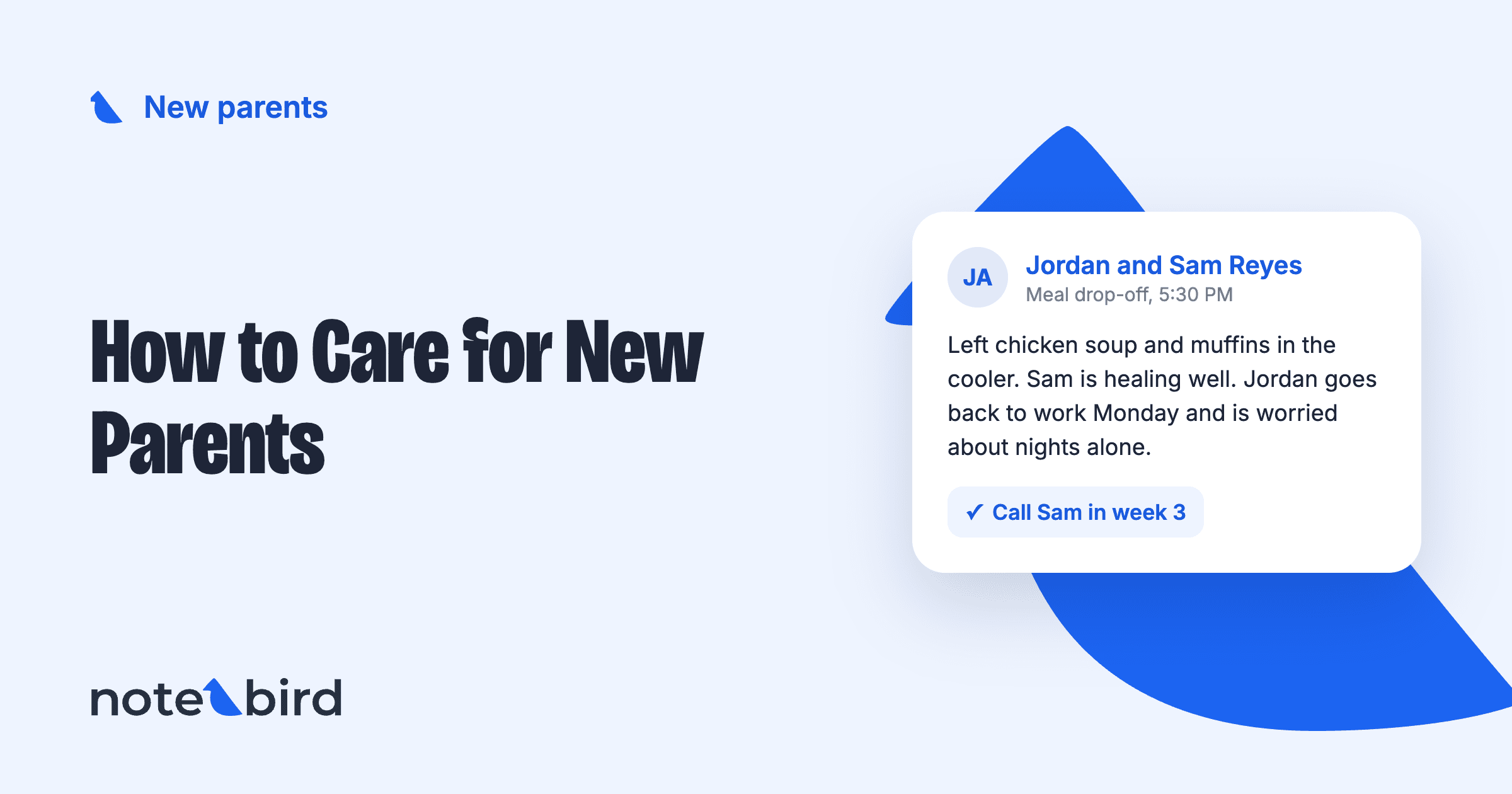
| Week 3 | Call. Ask "How are you both sleeping? How are you feeling?" Listen for signs of depression. | Care team member |
| Week 6 | Call or visit. Ask about the return to work and childcare. Bring a freezer meal. | Care team member |
| First Sunday back | Greet them by name and say the baby's name. Show them the nursery. | Pastor, greeters |
| Month 2 or 3 | Talk about baptism or dedication, if they want it. | Pastor |
| Baptism or dedication | Follow the baptism follow-up checklist. | Pastor, care team |
| Month 6 | Call. Ask how the family is doing and invite them to a parents group. | Care team member |
| First birthday | Send a card to the child and the parents. | Card ministry |
Follow Up Through Baptism or Dedication
A baptism or dedication is a promise. Parents promise to raise the child in faith. The congregation often promises to help. The care after the service is how a church keeps that promise.
After the service:
- Send a note to the parents the same week.
- Call at one month. Ask how the family is doing.
- Connect them to a parents group or class by six months.
- Mark the date and send a card on the first anniversary.
For the full plan, see our follow-up checklist after a baptism. It works for infant baptism and child dedication alike.
How to Pray for New Parents
Ask first: "Can I pray for you before I go?" Then keep it short.
"Lord, thank you for Ava. Thank you for Jordan and Sam. Give them rest when they can rest, and strength when they cannot. Give them patience with each other. Keep this family healthy and safe. Let them know they are loved, and that they are not alone. Amen."
For a NICU family: "Lord, be near to Liam in his small bed. Guide the hands of every nurse and doctor. Give Maria and Josh peace while they wait. Amen."
Keep Care Going Past the First Month
The first week is easy to get right. The care that matters most often comes later: the call in week six, the card on the first birthday, the invitation to a parents group. Write down each promise and give it an owner.
In Notebird, log each visit, meal, or call as one update for the whole family (it shows on each parent's page), so the whole team can see what has been done. For a wider look at how churches remember these dates, read how churches track member milestones, or see how Notebird helps with church follow-up.
A church welcomes a new life with small things done on the right day: a meal on the porch, a text they can read at 3 AM, a card on the first birthday.