Pastoral Care in ShulCloud: What It Does Well and What to Add
What ShulCloud does for bikur cholim, shiva, and yahrzeits, where a caring committee outgrows it, and how the free Notebird exporter adds a shared care record.
By Thomas Griffin, Owner and CEO
Published
ShulCloud handles synagogue care basics well. It reminds members of each yahrzeit ahead of time, with the Hebrew date, holds private CRM notes, and sends follow-up reminders to a named person. Synagogues outgrow it when a whole caring committee shares the work. The common setup is ShulCloud for records and Notebird for care, linked by a free exporter.
ShulCloud is a synagogue management system for membership, dues and billing, the website, and the Jewish calendar. It is the system of record for many congregations. It was not built as a shared workspace for a rabbi and twenty caring committee volunteers. This guide shows what ShulCloud does well for care, where a caring committee gets stuck, and how to give care its own home without leaving ShulCloud.
What Does ShulCloud Do Well for Pastoral Care?
ShulCloud does yahrzeits very well, and it gives the office private notes with follow-up reminders. For a synagogue where the rabbi and the executive director do most of the care, that can be enough. These are the parts that help.
Yahrzeits on the Hebrew Calendar
This is where ShulCloud is strong. A yahrzeit falls on the Hebrew date of the death, so its date on the regular calendar moves each year. ShulCloud's yahrzeit tools carry the Hebrew date through.
- Members can add their own yahrzeits. Many congregations ask members to add loved ones in the Yahrzeit tab of their ShulCloud account. Or Shalom, for example, asks for the full Hebrew name and whether the death was "before or after sunset."
- Reminders go out ahead of time. ShulCloud yahrzeit emails "are reminders sent in advance of a Yahrzeit date." A "Days Before Reminder" setting controls how early, and the email can include the Hebrew date of the yahrzeit and the relationship to the deceased.
- Paper letters too. For members who do not read email, the office can send yahrzeit paper mail to "anyone observing a Yahrzeit in the defined date range."
- Gabbaim know what is coming. Per Shulware, "Gabbaim have reports that inform them of upcoming yahrzeits," and yahrzeits show on each member's private calendar.
CRM Notes and Follow-Up Reminders
ShulCloud's CRM keeps notes on a member's account. Its help center says "CRM notes are always for admins only - the users will NEVER see what is written there." When you check "Setup a Follow up," you "can specify a person to be notified and a date and time." That person gets an email and an alert in the Admin Menu, and open follow-ups sit at the top of the CRM page.
Private CRM Categories
CRM categories let you set privacy rules that are "visible to only certain people in the system." You choose who sees each category "either with Tags, Admin Permissions, or both." A rabbi can keep a category of pastoral notes that the front office does not read.
An App for Staff
The ShulCloud Administrator app for iPhone and Android lets staff "keep track of important member events and notes," "set follow up reminders," and "look up members birthdays, anniversaries, yahrzeits and much more."
Where Does Care Get Hard in ShulCloud?
Care gets hard when it moves from the office to a committee. ShulCloud's CRM is built around one note and one follow-up at a time, in the Admin Menu of the system that also runs membership and dues. A caring committee works across many volunteers, many weeks, and a whole year of mourning.
Here is a common season. Sarah Levin's husband, Daniel, goes into the hospital in March. He dies in April.
- The rabbi visits Daniel and writes a CRM note. The bikur cholim volunteer who visits two days later has no ShulCloud admin access, so her update goes to the rabbi by text message.
- Daniel dies. The shiva coordinator organizes meals and helps gather a minyan. The plans live in a group text.
- Shiva ends. Somebody should call Sarah each week during sheloshim, then each month. A CRM follow-up can remind one person on one date. Somebody has to set the next one, and the next.
- A volunteer learns that Sarah is struggling to sleep and eat. She is not sure who should know, or where to write it.
- Next spring, ShulCloud reminds Sarah of Daniel's yahrzeit, as it should. Whether the caring committee calls her that week depends on who remembers.
None of these are mistakes. ShulCloud's yahrzeit tools are built to remind the mourner and the gabbai. The caring committee's work, from bikur cholim to shiva to the first yahrzeit, is a different job. These are the gaps synagogues feel:
- Care lives in the admin side. ShulCloud's help center says CRM notes are "for admins only," and follow-ups are found under "Admin Menu - CRM." Many synagogues would rather not give every caring committee volunteer access to the system that holds dues and billing.
- The story is split. The rabbi's notes are in the CRM. The volunteers' visits, rides, and shiva meals are in text messages and email. Nobody sees the whole picture of how Sarah is doing.
- A year of mourning is many follow-ups. A follow-up reminder covers one call on one date. The first year after a death needs calls through shiva, sheloshim, each month, before the unveiling, and before the first yahrzeit.
- The committee needs the yahrzeit too. The member gets the yahrzeit reminder. The volunteer who should call that week needs one as well.
What Does Notebird Add to ShulCloud?
Notebird adds one shared, private care record for your clergy and caring committee. ShulCloud stays your system of record. Notebird holds every bikur cholim visit, shiva call, and chesed follow-up, with an owner on each next step, and your congregants come in from ShulCloud with the free exporter. Here is the same season with Sarah and Daniel in Notebird.
One Care History Per Congregant
The rabbi logs the hospital visit as an update from a phone. The bikur cholim volunteer logs hers from the hospital lobby. The shiva coordinator notes that meals are covered through Thursday. One update can cover a whole household, so a shiva call to Sarah and her children is one entry. Everyone who serves the family sees what happened and what comes next.
Can Caring Committee Volunteers See Only Their Own Congregants?
Yes, in Notebird. Put the congregants each volunteer cares for in a group and give that volunteer the Group Member role. They see only the people in their groups and nobody else in your synagogue. They never need ShulCloud admin access, and they log care from any phone.
Can the Rabbi Keep Sensitive Notes Private?
Yes, in both. In ShulCloud, a private CRM category is visible only to the people you choose. In Notebird, mark an update as restricted, and only the Organization Owner, Organization Admins, and Care Admins can read it, with its files and comments. A volunteer cannot write a restricted update.
When the volunteer hears that Sarah is not sleeping or eating, she tells the rabbi, and the rabbi writes the restricted note. Our security page lists what each role can see.
Follow-Ups Through the Whole First Year
"Call Sarah" becomes a task with an owner and a due date. Set it to repeat every week during sheloshim, then change it to every month. It shows in that volunteer's Early Bird Report each morning until it is done, so the call does not depend on one person's memory.
Yahrzeits the Committee Sees Too
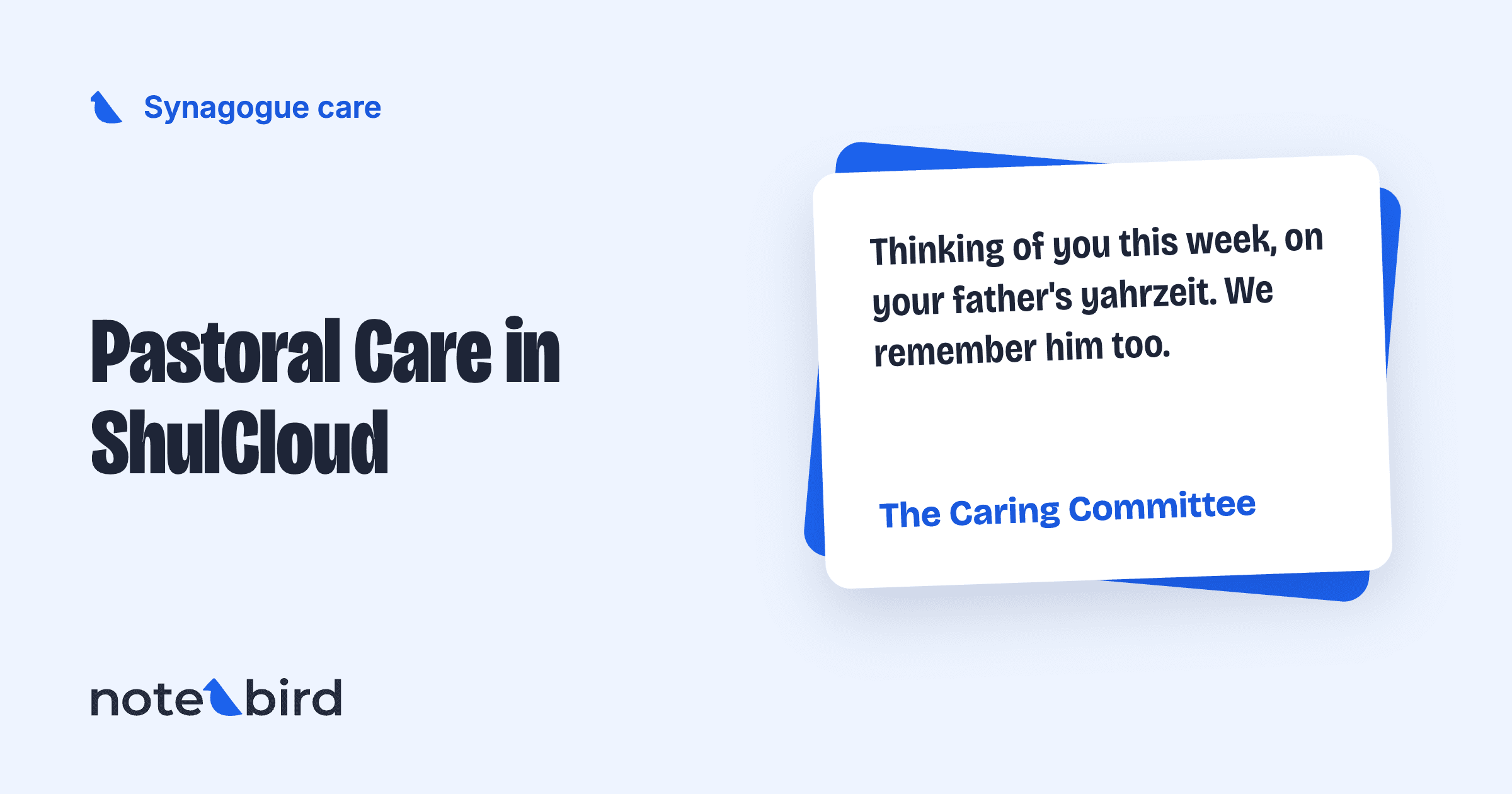
If you include yahrzeits in the export, each one comes into Notebird as a milestone on its next observance date. On the day, it shows in the Early Bird Report for the rabbi and the caring committee. ShulCloud still reminds the family. Notebird reminds the people who will call.
| When | What the caring committee does | Where it lives in Notebird |
|---|---|---|
| In the hospital | Bikur cholim visits and calls | Updates on Daniel's history |
| Shiva | Meals, a minyan, shiva calls | One household update per visit |
| Sheloshim | A call each week | A weekly task with an owner |
| Months 2 to 11 | A call each month | A monthly task |
| Before the unveiling | A call to offer help | A task with a due date |
| First yahrzeit | A call that week | The yahrzeit milestone in the Early Bird Report |
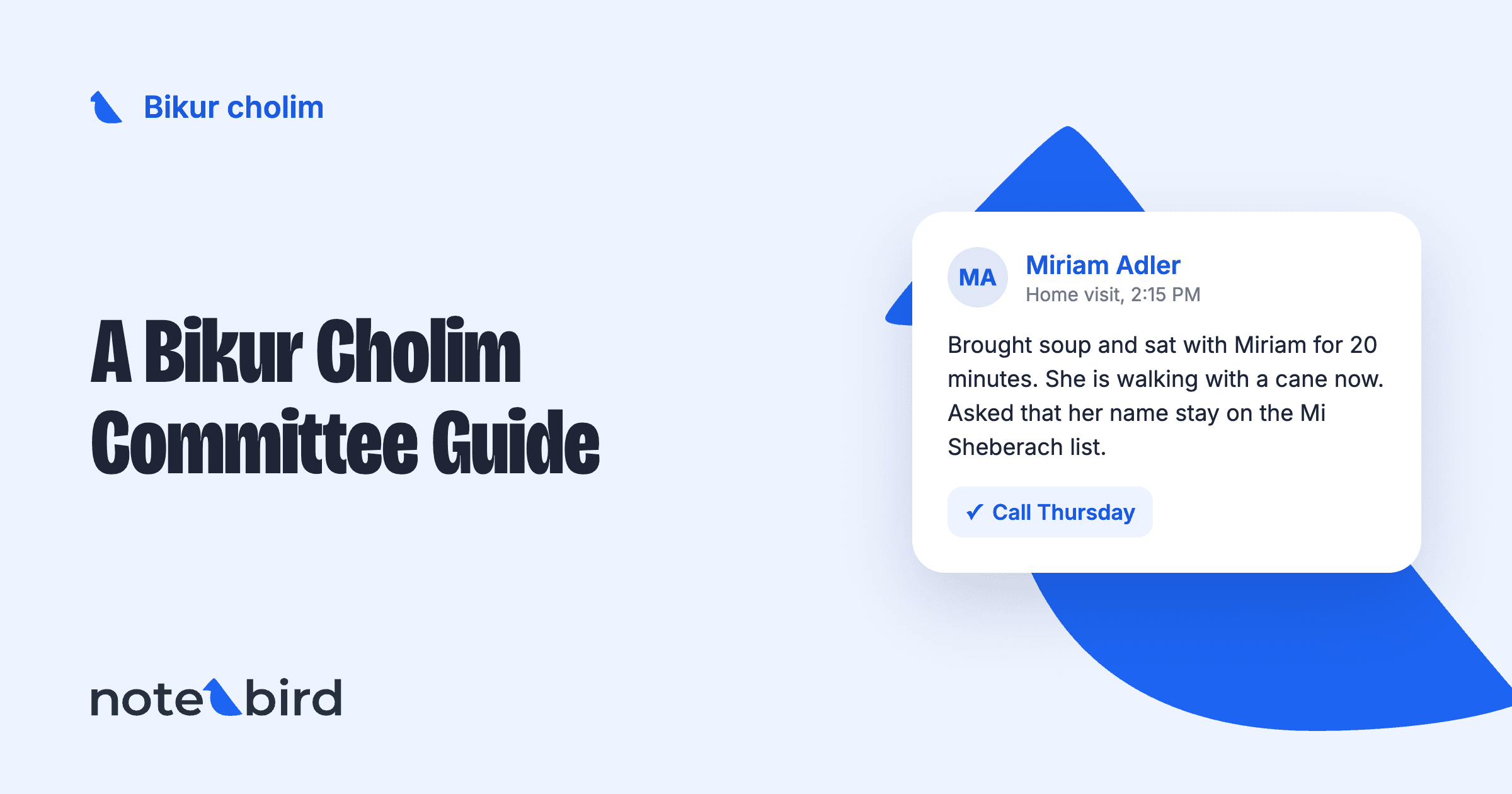
For a fuller rhythm of calls through the year of mourning, read our caring committee guide. For visits to the sick, read the bikur cholim committee guide.
Each morning, the Early Bird Report shows each person their overdue tasks, the tasks due today, today's milestones, and yesterday's updates. On Mondays it also suggests a few congregants who have not had care in a while. The rabbi sees the whole committee's care in the activity feed, and care reports print a care history for a clergy transition or a committee meeting.
Try Notebird free for 14 days No credit card. Try the exporter with your own ShulCloud data.
How Does the ShulCloud Exporter Work?
The free Notebird Synagogue Exporter is a Chrome extension. An admin signs in to ShulCloud and Notebird in the same browser and runs the export. It reads your ShulCloud reports and sends the data to Notebird. It is one-way and it is not automatic, so run it again when you want Notebird to pick up changes.
From ShulCloud to Notebird:
- Congregants, with family members on the same account linked.
- Phone numbers, emails, and addresses.
- Birthdays and anniversaries.
- Hebrew names, Hebrew birthdays, and parents' Hebrew names.
- Membership types and b'nai mitzvah dates.
- Yahrzeits, on their next observance date, if you choose to include them.
When someone dies: a congregant marked deceased in ShulCloud is archived in Notebird, so their care history stays.
Stays in ShulCloud: membership records, dues and billing, and yahrzeit notices to members. Nothing from Notebird is sent back to ShulCloud.
Stays private in Notebird: bikur cholim visits, shiva calls, chesed follow-ups, restricted notes, and care reports.
See more on our page about ShulCloud and Notebird.
ShulCloud Alone, or ShulCloud Plus Notebird?
| What you need | ShulCloud alone | ShulCloud + Notebird |
|---|---|---|
| Membership, dues, billing, website | Yes | Yes (ShulCloud) |
| Yahrzeit reminders to members | Yes, by email or paper | Yes (ShulCloud) |
| Yahrzeit reminder for the caring committee | Gabbai reports | Milestone in the Early Bird Report |
| Private notes for the rabbi | CRM categories with privacy rules | Restricted updates |
| Follow-up | One reminder per note, to one person | Tasks with an owner, due date, and repeats |
| One care history per congregant | CRM notes for admins | Every visit and call on one timeline |
| Volunteers log care without ShulCloud admin access | No | Yes, by group |
| See the committee's care at a glance | Open follow-ups on the CRM page | Activity feed, Early Bird, reports |
If your rabbi and office do the care, ShulCloud alone can work. Once a caring committee shares the work, most synagogues find a care app worth it. See how Notebird works for synagogues.
How to Set It Up This Week
- Start a free Notebird trial in Chrome. No credit card is needed.
- Install the free Notebird Synagogue Exporter from the Chrome Web Store.
- Sign in to ShulCloud as an admin in the same browser.
- Run the export. Open the extension, choose whether to include yahrzeits, and run it. Your congregants come into Notebird.
- Make a few care groups, such as Bikur Cholim, Shiva, and Homebound, and invite your caring committee as Group Members.
- Log the next visit from your phone. Then add the follow-up task before you leave the hospital.
- Run the exporter again on a set day each week, so new members and new yahrzeits reach Notebird.
Keep ShulCloud for membership, dues, the calendar, and yahrzeit notices. Let Notebird hold the care. Then when Daniel's yahrzeit comes, Sarah hears from her community too.