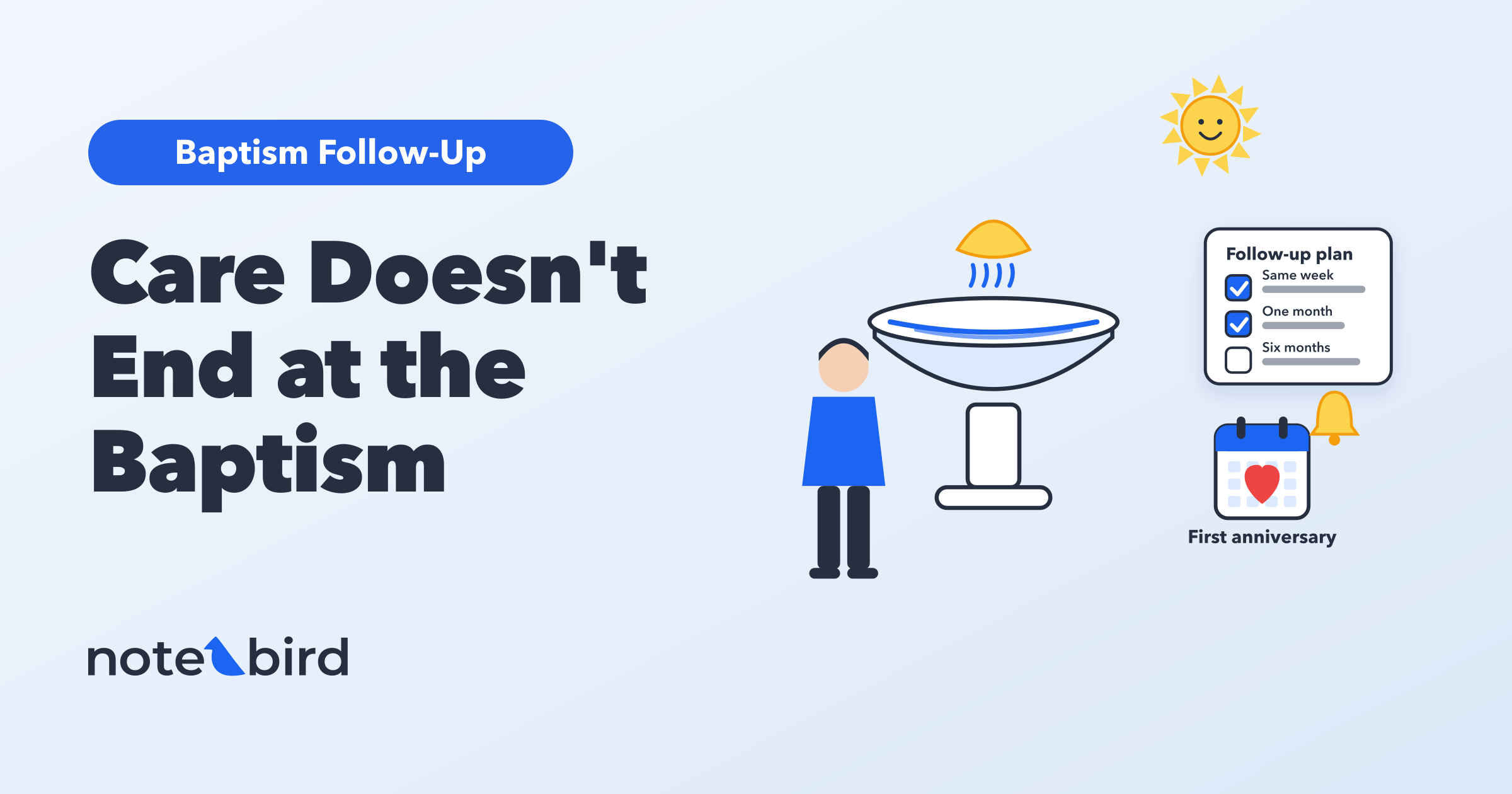
Follow-up pastoral care after a baptism: a simple checklist
What a church should do after a baptism, for infant and adult baptisms alike, with a simple timeline and a way to remember the anniversary every year.
Follow-up pastoral care after a baptism means staying close to the person or family for at least a year. Send a note the same week, check in at one month, connect them to a group by six months, and celebrate the first anniversary. Record the baptism date as a milestone so that anniversary is never missed.
What should a church do after a baptism?
Baptism day is full. There is family in town, photos in the lobby, and a meal after the service. Then Monday comes, and the person or family who stood at the font is just another name on the roll. Nobody planned it that way. It just happens.
The fix is small. Decide, before the service, what the next twelve months look like. Then write it down and give each step an owner.
Traditions differ on who is baptized and what it means. Some churches baptize infants and confirm them later. Others baptize only those who profess faith for themselves. This checklist works for both, because in every tradition the church makes a promise on baptism day: we will walk with you. Follow-up is how you keep that promise.
Three things belong in every follow-up plan:
- Celebrate. Say out loud that this mattered.
- Connect. Attach the person or family to real people in the church.
- Remember. Mark the date so the anniversary comes back around.
How to follow up with parents after infant baptism
When a baby or young child is baptized, the follow-up is really with the parents, and often the grandparents and godparents too. The child will not remember the day. The family will.
Parents made promises. In the Christian Reformed Church's guide for parents, The Baptism of Children, the church promises "to do its part in receiving, instructing, and encouraging your child within the fellowship of believers." That is a promise from the congregation, not just the pastor. Follow-up is how the congregation keeps it.
Here is what that looks like in practice:
- Same week. Call or handwrite a note. Thank them. Ask one open question: how did the day feel? New parents are tired. Keep it short.
- Ask about the family, not only the child. A new baby can strain a marriage, a budget, and sleep. Ask how mom is doing. Ask how dad is doing. Listen for a need you can meet.
- Bring in the godparents or sponsors. If they attend your church, thank them and tell them how they can help. If they do not, a short note still helps them take the role seriously.
- Give the parents a next step. A parents' group, a class on raising children in faith, or a mentor couple who has been there. Pick one. Do not hand them a brochure with nine options.
- Watch for the family's return. Some families disappear for a few months after a baptism. A gentle check-in at one month can bring them back before the gap grows.
If your tradition uses baptismal candles, gowns, or certificates, remind parents to keep them. They become the tools for celebrating anniversaries later.
Adult baptism follow-up: discipleship and next steps
Believer's baptism is a public start. The person just told the whole room that they belong to Christ. The weeks after that are tender. Old habits pull, new friends are few, and questions come fast.
Robby Gallaty, writing for Lifeway Research, puts it plainly: "baptism isn't the finish line of our faith but the starting line." His church built a disciple-making process to invest in everyone who crossed the threshold of faith. You do not need a large program to do the same. You need one clear next step and one person who checks in.
- Same week. Meet or call. Ask what the day meant to them. Ask what they are nervous about. Give them one next step: a small group, a new-believer class, or a mentor. One step, not three.
- Pair them with someone. A mentor or a friend in the church who will text them, sit with them on Sunday, and answer the questions they are embarrassed to ask.
- Help them tell their story. Many people who are baptized as adults have family or coworkers who do not understand it. Help them find simple words for what happened.
- Point them toward serving. Not right away, and not a big job. A place to help by month six gives them roots.
- Keep asking how it is going. Faith does not grow on a schedule. Some months are dry. A check-in at six months and again at one year tells them the church did not forget.
If a teen or child was baptized on their own profession of faith, use this list, and include the parents in every step.
A baptism follow-up checklist by timeline
Here is the whole plan in one place. Copy it into your care notes and give each line a name.
Same week
- Send a handwritten card or make a call within seven days.
- Record the baptism date in your church database.
- Note the names of parents, godparents, sponsors, or mentors alongside the person.
- Give one clear next step, and put the invitation in writing.
- Post or share a photo, if the family agreed to it, so the congregation can celebrate too.
One month
- Check in by phone, text, or a short visit. Ask an open question and listen.
- Ask whether they took the next step. If not, ask what got in the way. No guilt.
- For infant baptism, ask how the parents are sleeping and coping.
- For adult baptism, ask what questions have come up since the service.
- Log the conversation so the next person who calls knows what was said.
Six months
- Confirm the person or family is connected to a group, class, or mentor.
- Ask if there is a place they would like to serve.
- Look back at your notes. Has anything changed at home, at work, or in health?
- Pray for them by name, and tell them you did.
First anniversary
- Send a card that names the date. "One year ago today you were baptized."
- Invite the family to light the baptismal candle or read the baptism promises at home.
- Ask a simple question: how has your faith grown this year?
- Set the reminder for next year.
Give the whole list to one person to own, or split the steps across your team. Either works. What does not work is hoping someone will remember. If your team tracks follow-ups as tasks with due dates, put each of these lines in now, on baptism day.
Recording the baptism date so the anniversary is remembered
The anniversary is the step churches miss. The first three touches happen because the baptism is fresh. The one-year mark comes when the pastor is busy with something else.
Many traditions already treat the date as a yearly celebration. In The Lutheran Witness, Kristen Einertson and Tessa Muench describe a "baptismal birthday" where families "pull out the Christian's baptismal gown or cloth, light the baptismal candle, and gather with sponsors or godparents." A short card from the church fits right into that.
Even in traditions that do not celebrate the date at home, a note from the church on the anniversary says the same thing: we remember, and we are still walking with you.
To make sure it happens:
- Record the date on baptism day, not later. Write it in the person's record before you leave the building.
- Mark it as a repeating yearly milestone. A one-time note is forgotten. A repeating milestone shows up every year.
- Add a short note. Who baptized them, who the godparents or mentors are, and anything the family said that day. Future you will need this.
- Assign the reminder to a person. The date should land on someone's list a few days ahead, with time to write a card.
- Keep it going past year one. The second and fifth anniversaries matter too, and they cost almost nothing.
If you use Notebird, add the baptism as a milestone and mark it annual. It returns each year, and your team sees it before the day arrives, not after.
Why this matters
Harry Boonstra, in the same Christian Reformed Church guide, tells of a pastor who dipped his hands into the font, flung water toward the pews, and said, "Remember your baptism!" The point was not nostalgia. It was that the promises made at the font are meant to be lived out for years.
A church that follows up after a baptism helps people remember. A card, a call, a group, a name on a list. None of it is hard. All of it says the same thing: we saw you that day, and we still see you now.