Pastoral Care Before and After Surgery: A Simple Plan for Care Teams
A surgery care plan for churches: the pre-surgery call, the day of surgery, meals, the first week home, and check-ins at 2, 4 and 6 weeks. Free checklist.
By Thomas Griffin, Owner and CEO
Published
Pastoral care for surgery starts before the surgery, not after. Call a few days before to get the details and pray. Text the family on the day. Visit in the hospital if they want it. Call the day after they come home, set up meals, and then check in at two, four, and six weeks. Care for the caregiver too.
Why Surgery Care Needs a Plan
Illness, surgery, and hospital stays are some of the most common reasons churches give care. Surgery is common, and it has a clear start date. That makes it one of the easiest kinds of care to plan.
But most churches only plan the hospital visit. Then the person goes home, the meals stop after a week, and nobody calls until they come back to church six weeks later. The long part of recovery is the part people forget.
The plan most care teams want is simple: a call before surgery, a follow-up after it, and check-ins through the long recovery. That is the right plan. You can do it with a list and a calendar. Here it is.
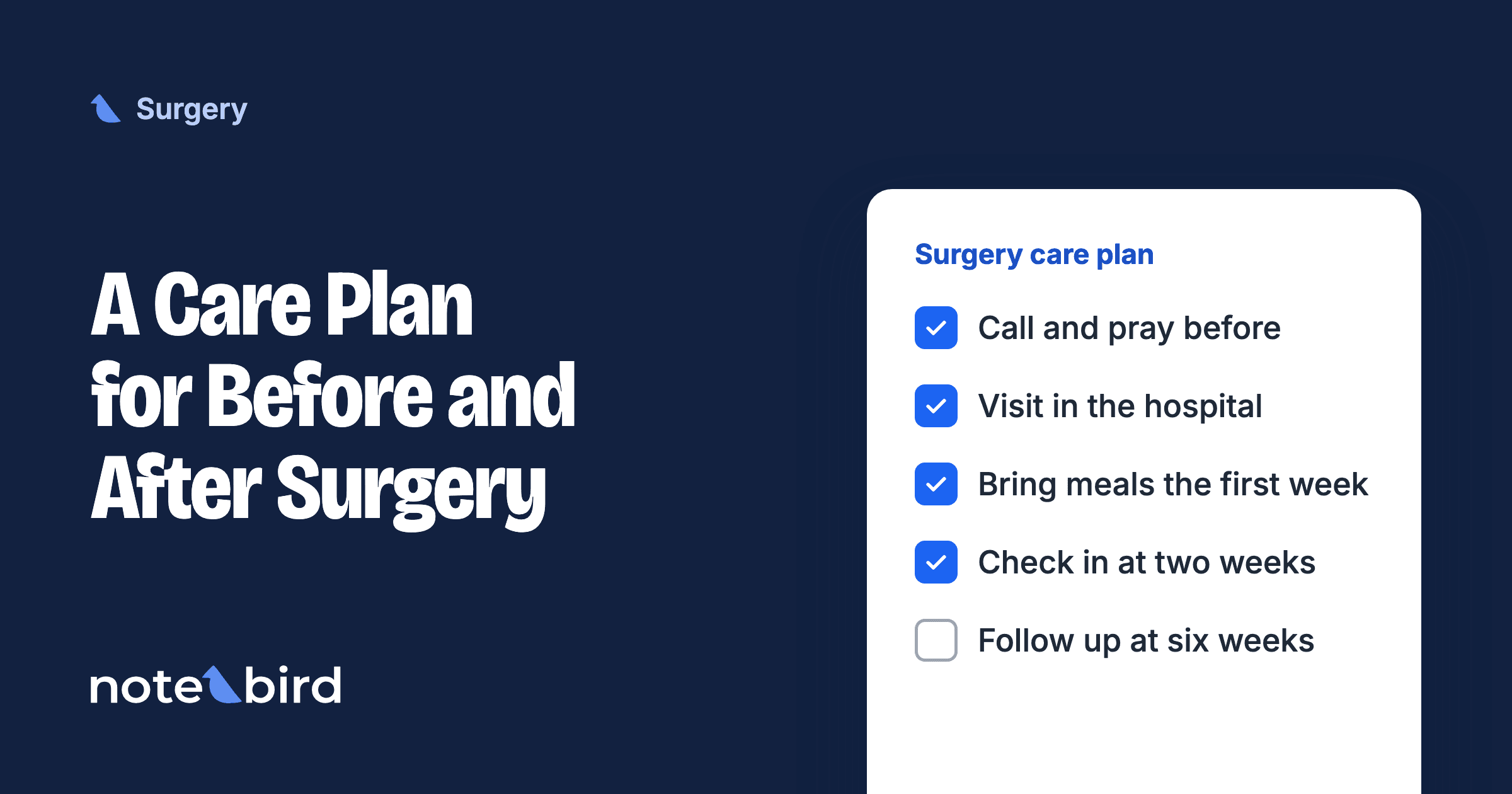
The Surgery Care Plan at a Glance
| When | What to do | Who |
|---|---|---|
| 3 to 7 days before | Pre-surgery call or visit. Get details. Pray. | Pastor or care team lead |
| 1 to 2 days before | Ask the meal team to plan the first week home. | Care team lead |
| Day of surgery | Text the family. Visit only if asked. | Pastor |
| In the hospital | Short visit. Pray. Write down what you learn. | Pastor or hospital visitor |
| Day after going home | Call. Ask about pain, sleep, and help at home. | Care team member |
| Week 1 home | Meals. Rides. One short visit. | Meal team, care team |
| Week 2 | Call. Ask what help is still needed. | Care team member |
| Week 4 | Call or visit. Check on the caregiver. | Care team member |
| Week 6 | Call. Ask about the return to normal life and church. | Pastor or care team member |
| Long recovery | Call every 2 weeks until they are back at church. | Care team member |
Before Surgery: The Pre-Surgery Call and Prayer
Call or visit three to seven days before the surgery. The goal is simple: learn what is happening, pray, and tell them the church will be with them.
Questions to ask:
- "What day is the surgery, and at which hospital?"
- "What time do you need to be there?"
- "Who will drive you, and who will stay with you after?"
- "May we share this with the prayer team? What can we say?"
- "Would you like a visit in the hospital, or would you prefer a call?"
- "What would help most in the first week home?"
Question 3 matters more than it seems. After general anesthesia, people need help. The American Society of Anesthesiologists says that if you go home the same day, "you will need someone to take you home because you won't be able to drive or take public transportation by yourself." It adds: "It's best to have someone with you for at least the first 24 hours after general anesthesia." See their page on recovery after anesthesia. If a widow or a single member has no driver, the church can find one.
Question 4 matters too. Always ask before you share a name with the prayer chain or from the pulpit. Some people want privacy about their health.
Then pray. Keep it short and use what they told you: "Lord, thank you for Ann. You know she is nervous about Thursday. Give her rest the night before. Guide the hands of her surgeons and nurses. Be near to Bill as he waits. Amen."
End the call with the next step: "I will text Bill on Thursday morning, and I will call you when you get home."
The Day of Surgery
On the day of surgery, a short text to the family is enough:
"Praying for Ann and for you today. No need to reply."
The words "no need to reply" are a kindness. The family is busy and tired.
Some families want the pastor to come and pray before the surgery, or to sit with them in the waiting room. If they ask, go. Keep the visit short. Hospitals often have quiet waiting rooms, and many have a chaplain. Do not ask the staff for medical news. Ask the family.
The Hospital Visit
If the person stays in the hospital, a short visit means a lot. Ten to fifteen minutes is enough. Check with the family first, sanitize your hands, and do not visit if you are sick.
Say who you are, ask one simple question, and listen. Offer to pray before you leave. Then tell them the next step: "Maria from the meal team will call Bill tomorrow about dinners."
For the exact words to use at the bedside, read what to say on a hospital visit. For good habits in the hospital, read 10 timeless hospital visit principles. If your church wants more people to help with these visits, see how to start a hospital visitation ministry.
The First Week Home
The first week home is often harder than the hospital. In the hospital, nurses do the work. At home, a spouse or an adult child does it.
MedlinePlus, from the U.S. National Library of Medicine, says in its guide to getting your home ready after knee or hip surgery that people "may need help bathing, using the toilet, cooking, running errands, shopping, going to provider visits, and exercising." That guide is about joint surgery, but the list fits many surgeries. It also advises people to set up the home "well in advance" of the surgery.
That is work a care team can do:
- Before the surgery, ask if they need help to move a bed downstairs or clear a path.
- Call the day after they come home. Ask: "How was the first night? What is hard right now?"
- Make one short visit in the first week. Twenty minutes is plenty.
- Ask who is taking them to the follow-up appointment. Offer a ride if needed.
Do not give medical advice. If they mention pain, fever, or a problem with the wound, ask: "Have you called your doctor about that?" and encourage them to call.
Meals and Practical Help
Meals are the most common help, and they work. Most people need meals for the first week or two. Ask about food allergies and diet limits before the first meal. A shared meal sign-up sheet keeps two families from bringing lasagna on the same night.
Other help people forget to offer:
- Rides to follow-up visits and physical therapy.
- Mowing the lawn, raking leaves, or clearing snow.
- Walking or feeding the dog. MedlinePlus notes that small pets can cause falls and suggests a pet may need to stay elsewhere for the first few weeks.
- Picking up groceries or prescriptions.
- Sitting with the patient so the spouse can go out for an hour.
Make each offer specific. "Can I bring dinner Tuesday?" gets a yes. "Let me know if you need anything" gets a polite "Thank you."
The 2 to 6 Week Check-Ins
After the first week, the meals stop and the visits slow down. This is when people start to feel alone. Recovery is slower than they hoped. They are tired, sore, and bored. Some feel low or discouraged.
Plan three calls:
- Week 2: "How is the recovery going? What help do you still need?" Ask about the caregiver too.
- Week 4: "What did the doctor say at the follow-up visit?" Listen for worry or bad news.
- Week 6: "How are you feeling about getting back to normal life? We miss you at church." Offer a ride to the first Sunday back.
Recovery time is different for every person and every surgery. Do not guess. Ask what the surgeon told them, and plan your calls around that.
When they come back to church, notice it. A short "It is so good to see you" from the pastor at the door tells them the church was waiting for them.
When Recovery Is Long
Some recoveries take months. A hip or knee replacement needs weeks of physical therapy. Heart surgery may lead to cardiac rehab. Cancer surgery is often followed by more treatment. Some people go to a rehab center before they go home.
For a long recovery:
- Keep a call every two weeks until the person is back at church.
- Visit them at the rehab center if they go to one. Those visits are often lonely.
- Offer home communion or a recorded service if they cannot come to church.
- If treatment continues, plan care around each treatment, not only the surgery.
- Ask the person what they miss most about church. Then bring a piece of it to them.
Write down what you learn at each call. The person who calls in week ten should know what the person in week eight heard.
Care for the Caregiver
The spouse or adult child who cares for the patient often carries the heaviest load, and nobody asks how they are doing.
The National Institute on Aging says in its tips for caregivers that a primary caregiver, "especially a spouse or partner," may not want to ask for a break. It suggests that others can help by "taking on specific tasks" and by offering to stay with the person so the caregiver gets time to rest.
Ways your team can help:
- Ask the caregiver directly: "How are you doing? Are you sleeping?"
- Offer to sit with the patient for two hours so the caregiver can get out.
- Bring a meal that is just for the caregiver, on a day when no one else does.
- Pray for the caregiver by name.
What to Say Before and After Surgery
Scripts you can use:
- Text the night before: "Praying for you tonight and tomorrow. We love you."
- Text on the day: "Praying for Ann and for you today. No need to reply."
- Card after surgery: "We are so glad the surgery is behind you. Take your time to heal. The church is praying for you, and Maria will call about meals this week."
- Call at week 4: "I wanted to check in. How are you doing, really? Is there anything that would make this week easier?"
Avoid:
- Stories about someone else's surgery that went wrong.
- Medical advice, or "Have you tried...?"
- "You'll be back to normal in no time." (They may not be.)
- "Let me know if you need anything." (Offer something specific instead.)
Write the Plan Down the Day You Hear About the Surgery
The best time to plan is the moment someone tells you they have surgery coming. Write down the date, the hospital, the driver, and the caregiver. Then put each call on the calendar with a name next to it. Print the Surgery Care Plan Checklist and keep one for each person. If you want each step to come to the right person on the right day, try Notebird tasks free for 14 days at my.notebird.app/signup.